
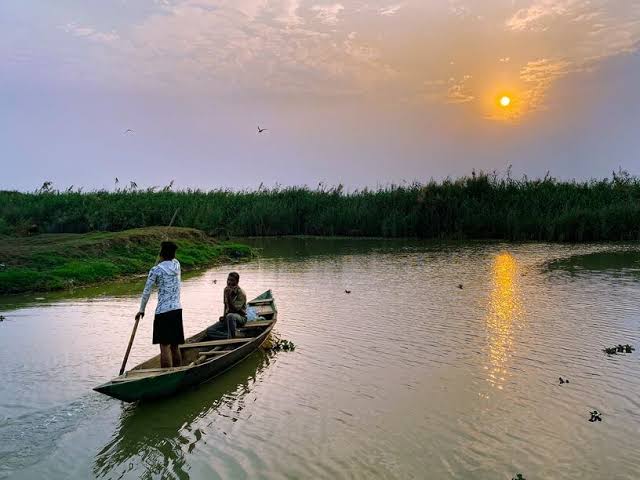
On the northern edge of the magnificent Chilika Lake, Mangalajodi is a village where water, birds, boats, faith and centuries old traditions have lived together for generations. When winter arrives, the wetlands come alive with thousands of migratory birds, transforming the landscape into a spectacular theatre of colour, movement and sound.
But Mangalajodi is much more than a destination for birdwatchers.
It is a village with a remarkable cultural memory- a place where the ancient traditions of Odisha continue to breathe through its festivals, temples, folk performances and community life.
A Village Beside the Chilika Lake
Chilika, the vast brackish water lagoon on Odisha’s coast, is one of India’s great natural treasures. Its wetlands provide an important winter refuge for migratory birds travelling long distances across continents.
And at Mangalajodi, visitors can experience this extraordinary natural world from remarkably close quarters.
As the morning mist begins to lift from the wetlands, traditional boats move quietly through the waterways. Flocks of birds rise from the reeds and settle again across the marshes. Painted wings, long beaks, graceful necks and sudden flights create a constantly changing panorama.
For a nature lover, it is unforgettable.
For a photographer, it is a dream.
And for the people of Mangalajodi, it is home.
From Hunting Ground to Bird Sanctuary
Perhaps the most inspiring chapter in Mangalajodi’s modern story is the transformation of its relationship with birds.
There was a time when migratory birds were hunted in the wetlands. Over the years, however, local awareness and community-led conservation began changing that story.
Local bird protectors, conservation groups and villagers worked together to protect the birds and their habitat. The Mahaveer Pakshi Surakshya Samiti, along with other community initiatives and organisations, played an important role in this transformation.
What emerged was a powerful example of conservation rooted in the community itself.
The people who depended on the wetland gradually became its protectors.
The birds that once faced danger became a source of pride, livelihood and inspiration.
This remarkable turnaround attracted the attention of government wildlife and tourism authorities and conservation organisations. Infrastructure such as a bird interpretation centre, watchtower and jetty further helped establish Mangalajodi as an important destination for responsible nature tourism.
Today, Mangalajodi is internationally recognised as an important birding area and is celebrated as one of the remarkable community-based conservation stories associated with Chilika.
When Winter Brings Wings
Every winter, Mangalajodi receives visitors of another kind.
Migratory birds arrive from distant northern lands, seeking the warmer wetlands of Chilika. The marshes become their temporary home, offering food, shelter and a place to rest during their long journey.
This seasonal arrival has become one of Mangalajodi’s greatest attractions.
But the true magic is not simply the number of birds.
It is the experience of being surrounded by a living wetland.
A boat gliding through narrow channels.
The call of a distant bird.
Ripples spreading across still water.
A flock suddenly taking flight.
Sunlight falling across the reeds.
And, beyond it all, the immense waters of Chilika.
Mangalajodi invites you to slow down and watch.
A Memory of Boats and Trade
Long before bird tourism became associated with Mangalajodi, the waterways of this region were part of a much older story.
The village carries memories of Utkaliya Nau-Banijya the traditional maritime and trading heritage of Odisha.
Odisha’s relationship with the sea and waterways reaches deep into history. Boats connected communities, carried goods and linked Odisha with distant lands.
In Mangalajodi, the presence of the wetland is therefore not merely a geographical feature. Water has been part of the village’s identity, movement and livelihood for generations.
Today, when a traditional boat carries a visitor quietly through the bird-filled wetlands, it offers a small connection to that older relationship between the people of Odisha and their waterways.
A Village Where Culture Lives
Mangalajodi’s heritage does not end at the water’s edge.
The village continues to preserve traditions that have been passed from generation to generation.
Among them are Danda Yatra and Shree Ramleela, traditional performances that remain part of community life.
The village is also associated with an old Badi-Pala Mandap, regarded as the second oldest in the area. According to local tradition, during the Rajo festival, Badi-Pala has been performed for five days every year in front of Maa Majhianee Tara since the nineteenth century.
These traditions are more than performances.
They are living memories.
They bring together generations, preserve local stories and keep the cultural identity of the village alive.
The Sacred Heart of Mangalajodi
At the heart of the village stands the Sri Sri Patitapaban Dev Temple, an important centre of faith and community life.
The Patitapaban Temple also reflects the distinctive architectural traditions of Odisha. Its form, atmosphere and sacred surroundings offer visitors another way to understand Mangalajodi not simply as a wetland destination, but as a village shaped by spirituality and tradition.
Community initiatives such as the Srimad Bhagavat Saptah have also contributed to preserving ethical and spiritual values within the village.
Here, nature and faith exist side by side.
The wetland belongs to the birds.
The temple belongs to the community.
And both are woven into the identity of Mangalajodi.
From Livelihood to Sustainable Tourism
One of the most encouraging aspects of Mangalajodi’s story is the growing connection between conservation and livelihood.
Bird protection, eco-tourism and community participation have created opportunities for local people while encouraging visitors to appreciate the wetland responsibly.
Local bodies, non-governmental organisations, conservation groups and tourism initiatives have contributed to this development.
Eco-tourism establishments such as Nature Camp by Government of Odisha, Mangalajodi Eco-Tourism by Indian Grameen Service & RBS Foundationand Godwit Eco-Cottage by SSMPSShave helped promote the area as a destination for nature lovers while supporting the broader idea of sustainable rural livelihoods.
The goal is not simply to bring more visitors.
It is to ensure that tourism helps protect the very landscape that brings visitors here.
Come for the Birds. Stay for the Story.
Mangalajodi may first appear on a traveller’s map because of its birds.
But those who spend time here discover something deeper.
They discover a village beside one of Asia’s great lagoons.
They discover traditional boats moving through ancient waterways.
They discover the arrival of migratory birds each winter.
They discover folk traditions that continue to be performed.
They discover temples, festivals and stories passed from one generation to the next.
And they discover a community whose relationship with nature has been transformed into a story of protection and hope.